quarta-feira, 22 de julho de 2020

Nattens arvinger/Heirs of the Night | A great concept, a little rant.

Yet again, I should have spent the day revising my thesis, instead I binged this entire show.  This rant should be rather small... my time is limited.  ¯\_(ツ)_/¯


**Warning: The text below might contain spoilers and a fair amount of sarcasm**
**Disclaimer: All of this is purely my personal opinion. That means that it's not worth anything for anyone but me.** 


The concept is this show is great, but it is very clear that the budget was very limited. With a bigger budget this should could be fantastic. And with a bit of better writing as well...
Regarding the budget, I would say, give up on the some special effects and invest more on practical stuff. Most of the special effects and CGI is already sparsely used, for example when some character shapeshifts into some animal, we only see part of the transformation... show us that part once, and then just make the character shapeshift behind something. We have seen it once, we know how it works, we don't need to see it again, save money on that. Save money on the eyes, most of them don't need to be as intense as they were, save money on the magic, it can still be cool, while being less intense. Then invent the "spare" money on practical things, the scenarios,  the character's wardrobe, and so on.
It is clear they the producers tried their best, for that they deserve some praise. The writers, on the other hand... well. Lets just say, that it's not bad... but rather it's mediocre. I think that, even with a limited budget, the series could be a lot better if the writing was improved. There are moments where I had to use extreme suspension of belief... for example, when the heirs are having one of their classes, and people keep sneaking away from class, even worse, sneaking away from the ship! Or when characters talk, fight, scream with each other, on prow of the ship... and no one else on board notices it? Have you seen that ship? No? Look at it!
That's a tiny ship! If someone sneezes on board, everyone knows! So, if you having two characters sharing a secret conversation, or kissing, or whatever, at least stick to the rules that you have already established (more on this next paragraph), and make it so that they do the "secret action" away from other characters! For example, two characters are not supposed to fall in love, and they are literally kissing behind a hanging ragged piece of cloth! And then our main character sees them and tells them to be careful, no one should know that they are in love... bruh, everybody could see them as long as they had eyes!
Now, the ship, I think that it is great that the series managed to get a real replica of a ship to film on. Although, when the ship is sailing, it is clearly not the same ship, probably a miniature or CGI. Take some money out of the magic CGI (make it more practical effects), and please just put some CGI masts on that damn ship. I understand the the replica that you are using doesn't have the top part of the masts but, if you show us the ship sailing with full masts, then at least add those in when the ship is docked... Still on the ship, again due to constraints, it is understandable that the ship is small on the outside, and then it turns out to be huge on the inside. From the inside it appears to be a really big ship, with ample rooms (for a ship), from the outside, well, you can see by the image. Going back to the subject of the secrecy, if you ask the viewer to suspend their beliefs regarding the size of the rooms inside the ship, then use and abuse it! Make those "secret" scenes take place in some cabinet of the ship, or an empty room. Sometimes the ship looks so big that a character can have a secret conversation in a empty room, or have a fight in one part, and no one is around or notices it... and then there are scenes where the characters need two minutes alone, and it seems impossible because the ship is tiny!
Choose one! Either the ship is small, like the viewer sees it, or it is small on the outside and big on the inside! I can't keep changing my suspension of belief every five minutes!
Now a pet peeve, ok the ship probably has some meaning, being named after Dracula's love and etc... but come on... it's 1889! That looks like a XV century ship! You know what kind of ships where put to the sea in 1889? Look:

This is the French cruiser Alger, put to sea in 1889! No wonder the vampires are going extinct! They are ~400 years behind in technology!
Anyway, pet peeve over. :3

Oh, back to special effects, (because it's my rant, I can write in circles as much as I want, no one reads this anyway, muahaha), it must have been a pain, having to film a series about vampires that basically only are active at night, during the day! It led to some really "wacky" and strange effects, where they reduced the lighting of the scene, digitally? Maybe? I dunno, it clearly was obvious that it was all filmed during the day, with some weird filter or something... but I guess it passes. Again, gets a green card due to obviously having a small budget, suspension of disbelief takes care of that.
Ok, moving on to the acting! Some of the actors where children, but they all did a pretty good job overall, by the standards of child actors. The "teenager/young adult" actors vary a bit. The main actor,
Anastasia Martin, does a brilliant job, for me she clearly stood out in relation to the others. The adult cast was pretty good, no complaints there... (Christina Chong please marry me).

I particularly liked that each character maintained a bit of their cultural identity during the series. Lets be honest here, if this was an american series, the characters might have said one or two words in their native language when they first appeared on screen, but then they would switch to english-american with ease. Here each character clearly uses english as their second language as a mean to communicate with others that don't speak the same native tongue.

Finally, the story! I think the idea was brilliant, but it lacked in some key points, where things happen simply to move the plot along, or they happen and make no sense, according to what has been established. A good example is the death of the Condensa, like... she was supposed to be one of the strongest elders, but she gets overpowered at least twice by a single enemy, never giving much resistance, and then lets herself die...? What the hell... the other vampire, that was holding her, had time to run to the shade, and she just stands there, on her knees waiting for the Sun to turn her to dust? Use your legs woman! Move!
The idea of the core of the story being the vampire clans against Dracula seems great (I've done some research and it seems that the series is based on a book/series of books? I don't think they are translated to english at least... maybe with the series they will be translated).
But, the moment I saw the ship, I saw a big missed opportunity to make a series about vampire pirates, of course it could not be set in 1889, but still...
Anyhow, a small problem that I saw with the story was that, basically, every single problem that the characters had, could have been solved with one single action, yet they never do it... and then do it after the main "treat" of the season is dealt with. They have someone trying to steal their crystals, and the "red masks" hunting them, but... dudes, you are on a SHIP! Set sail god dammit! It's a wide world out there, your enemies would have to keep chasing you endlessly! Unless, the characters realize that their ship is more a tub than a ship, compared to other ships of the era, and are scared shirtless of traveling far with it! But they did get from Norway to Italy in that tub... so, why not keep moving?
Maybe they are indeed afraid? In this series, vampires also fear the ocean, they become immobilized in the water, unless they are in the possession of a crystal that allows them to swim. And yet, they decide to stay on a ship? If I commanded the Red Mask, I would just try to intimidate the vampires into setting sail, get any ship 1/3 (or even less) of the size of the Alger, caught the Elizabetha on open waters, fire upon it, and BAM, job done, to the button of the sea with all of your fangs!
Although the Red Masks might not be able to afford a ship of any kind, they seem to struggle financially (since they use all the silver against the vampires, rip) because they use a lot of bows and swords... for 1889 I would expect a lot more revolvers and bolt action rifles... but ok.

Anyway, it's late again, and my brain is shutting down.

The story is set up for a second season, I really hope that they manage to get the funding for it.
Mmmh, lets give it 3.5/5 (with 0.2 for the effort and 0.3 extra for Christina Chong).

segunda-feira, 20 de julho de 2020

"Harry Potter", by J.K. Rowling | School trauma nostalgia.

For a long, long time, I don't really know since when, I've owned a copy of the first Harry Potter book (Portuguese translation). I think someone must have given it to me after I watched the first movie, but I never read it. I remember opening it and starting to read it for school (back then we had to read one book each "period" (trimester?), and then present it to the class), but soon after our Portuguese Language teacher announced that the Harry Potter books where banned, and students could not read those books for their presentations. Not because of "religion" (I read somewhere that in some countries/communities the books are actually banned because of "witchcraft"... silly), but because of the movies, teachers feared that the kids would simply watch the movie(s) and present the story as if they had read the book. In a way it made sense, I can see some people doing that, but at the same time it might have damaged many kid's (including myself) will to read the series. Imagine a kid that didn't really like reading (aka: me), mostly because he was not good at it (dyslexia), and then you don't let him read one of the most popular books of the time, a book that peaked his interest... well guess what that kid (and many others of my class - and probably many more) thought: "Well, reading is a chore... I already have to read one mandatory book each period, plus another book of my choosing. I have this super popular book what I would not mind trying to read, but it as been prohibited. I really don't feel like reading anything else... so... lets not read anything at all." This was me and, along the years, many of my colleagues. Every time someone proposed (we had to ask the teacher if she would accept the book that we choose) a Harry Potter book, the teachers would deny it. Sometimes it was proposed by students that where proposing a book ahead of the movies... but the first movie had done it's damage, all Harry Potter book where banned from presentations during my twelve years of school. It reached a point where all students already knew that it was hopeless, for the last three years of school, only one person attempted to propose one of the books.
I'm not completely blaming it on the teachers, I didn't like reading in general, but now, as an adult, I think that it was wrong for them to prohibit students from using it for their evaluations. The objective of the project was to encourage students to read more. The kids that already liked to read, read the books on their own. Me, and probably other kids that didn't like to read, got discouraged from reading the first book, and so never really got hooked into it, and never had motivation to continue the series. Imagine, if Harry Potter had been allowed, at least some of the kids (that didn't like to read) would have read the first one and liked the story, then would have read the second one, the third and so fourth... 
I am not sure, but I think that it was Harry Potter that started the "trend" of not allowing books, that have been adapted into films/series, as something that students could present for their class.
And all of this could have been solved if the teachers had bothered to actually read the books and see the movies... obviously there are differences! So it would be possible to identify the students that only pretended to read a book, and actually only watched the movie.
I've been out of school for about eight years now (I think), from what I know (from my cousin and friends), the Harry Potter books are now a known "tabu". Everyone knows that the Harry Potter series doesn't count as a "book", because there are movies, and the same applies to all other (well known) book series that where adapted to cinema or television. Of course, not all teachers do this, I have hope that the "new generation" of teachers, that got educated during the ascension of Harry Potter, might now be more tolerant.

But anyway, I was saying something and got lot in my rant again, now I have to scroll up and see what the hell I was saying at the start of all of this. [...] Oh yes, I was ranting about how I got the books. So I owned the first one since... probably 2001 and then, many years later, when the last book came out, someone again offered me (for birthday or christmas) a copy of the last book (also translated in Portuguese). Since then I owned the first and the last books of the series, and never got past the first chapter of the first. Until now.
Usually I prefer to read a book in it's original language (if it's English - I am not fluent in other languages) but, since I already had two of the books in Portuguese, I decided to get the rest of them also in the same language. It has a bit of an investment, buying the remaining five books, so I opted for the Weasley route and got them in second hand (basically all of them never had been read - and the one that did, was in a very good condition).

And so my journey into the Wizarding World began, after disinfecting all the books that arrived in the mail, because Voldemort is child's play, compared to Covid.


**Warning: The text below might contain spoilers and a fair amount of sarcasm**
**Disclaimer: All of this is purely my personal opinion. That means that it's not worth anything for anyone but me.**

Has I was reading the first couple of books, I decided to not write a rant for each book, but rather just writing one rant for the entire series.

The first two books where "ok" for me, I think that I didn't enjoy them as much because they are more appropriate for a middle grade audience. But that also makes them fast reads, so I reached the third book rather quickly, and this was when I really started to enjoy it. Maybe because it was the first book where the theme of the story was not the same as the first book. Lets be honest, the first two books are very similar: Harry goes to school, discovers some strange things with his friends, turns out that Voldemort is behind it all, ruins Voldemort's plans, Gryffindor wins the cup. The third book was the first that did something new, putting Voldemort aside and expanding the story around Sirius.

I have the feeling that J.K. Rowling didn't really plan the entire series from the beginning, and just went along discovery writing. It is not necessarily a bad thing but, I had the impression (especially towards the last two books) that the author tried to "weave" many of the details of the first two books into the main story, in order to keep them more relevant.
But anyway, the Prisoner of Azkaban was the first book where Harry was "less special", and more relatable. Then it kind of dipped into the "Harry is special" trope again in the Goblet of Fire, the main plot felt kind of forced to me. In the end we discover that Voldemort was behind the entire plan, and that getting Harry to the end of the tournament was all his idea. But... like... Dumbledore, the other teachers, and even Harry and his friends feel a bit "dumbed down" in this book. For example, it was obvious that Harry didn't put his name in the Goblet. And the tournament is called "Triwizard Tournament"... TRI... aka three wizards! The fact that there are four is clearly an anomaly, as it is stated by Dumbledore and the other two directors of the competing schools. Obviously they feel that it's unfair that Hogwarts has two students competing, when they can have only one. "Oh but if the Goblet chose his name he now has to participate.", ok yes... but participating is one thing, competing is another! Harry clearly didn't want to take part in the tournament, the other two schools where against it, and everyone admitted that it was an anomaly! Then, why not do the only logical and fair thing available, since some magic from the Goblet compelled Harry to take part in the tasks...
For example, make Harry participate (fulfilling the Goblets demand), but not compete. If his case was an anomaly, against the rules even... why not just make Harry "surrender/give up/retreat" at the beguiling of each task, and award him zero points? He would be technically in the tournament, but would not unbalance the odds of each school and, more importantly, he would be completely safe, focus on his studies, and enjoy the tournament as somewhat of a spectator, like he wanted! And Voldmort would not succeed in is dumb complicated plan, because Harry would put one step in the maze, cast the red sparks in the air immediately, and go back to enjoy watching the final task along with his friends! What the hell was Dumbledore thinking? The man surely would be able to find a way around and trick the Goblet... sigh anyway, moving on. Out of the "non middle grade" books, the Goblet of Fire was my least favorite.
The Order of the Fenix was a fantastic breath of fresh air. Harry goes back to not being "special" ( I mean, he is special, but is not doing something completely out of the ordinary, that has never happened before, etc etc), he is just a teenager in a magical school, having to deal with the imposition of new rules that make no sense for him at all!
Yet again, the series relates well to situations that regular kids experience in school. (Here come the memories again). Back in my 8th or 9th year of shcool, a new rule got implemented that left everyone revolted and confused. To us kids, that new rule made no sense at all, but all the teachers and auxiliaries imposed it eagerly... and still today I don't see much sense to this rule. The rule was regarding footballs inside school. I never liked football, I never played it with my colleagues during the break between classes, but most of my colleagues did and I just stood there watching them play (I was never good at it). For years, almost every day, someone from the class would bring their football to school, we even had a rotation system to known who should bring the ball. We had usually two or three intervals per day. Some of ten minutes, one of twenty. One day, my colleagues where playing (the school had a huge football camp or dirt, at least four classes could be playing a game at the same time), when the gatekeeper came and confiscated all the balls! We didn't knew, but a new rule was now in place - the thing is, no one told the students about the new rule, and the gatekeeper also didn't say a word, just confiscated the balls and went away (now that I think of it... something was up with that man, in all my years there I can hardly recall hearing him say a word). For the following week people continued to bring balls to play, and they continued to be confiscated. Until finally a teacher decided to inform us of the new rule, while asking that we didn't tell anyone that she told us, because "students where supposed to discover the rule by themselves" - thank you Professor Rosa of History... I don't think that it now matters that it was you. :)
So the new rule consisted in: The students must bring their own footballs (and any other balls, we has a basket field as well), but said balls must be delivered directly to an auxiliary, otherwise they will be confiscated. The students can then fill in a form to RENT (yes, pay to play with our own ball) one of their own balls, ONLY during the the 20 minute break. The form could only be requested during said 20 minute interval, and would have to be approved by the teacher in charge of said class, the students would have to pay 20 cents before receiving the blank form. The balls can not leave the school grounds, and must be returned before the bell rings for the end of the 20 minute break. If it is returned after the ring of the bell, said student will be prohibited from renting any more balls until the end of the school year. And, the final touch, even after receiving the fully signed paper form, it is up to the responsible auxiliary to decide if the ball should be given to the student or not.
So, the school had already confiscated/stolen a ton a balls during a week, any new balls coming win would suffer the same fate. Students could not request a ball for the breaks of 10 minutes, only for the one of 20 minutes. When the bell rang for the break, one student would have to run from class to the teacher's pavilion, get in line if there where others trying to buy the paper form to request a ball, PAY 20 cents, fill in the form, ask to talk with the teacher responsible for their class (that might or not be there... or sometimes just where there but "not available"), get their permission and signature, get back in line for the auxiliary who accepts the forms and gives the balls, hope that said auxiliary was in a good mood (some days, and depending on the auxiliary they would just refuse to give balls), get the ball, run to the other side of the school, play, run back and get back in line, and hope that your turn comes before the bell rings... anyway, it was a disaster. Every day people payed 20 cents (for us kids that was quite a lot), and most days my classmates didn't get to play at all, when they did it was only for about 5 minutes. At the end of the year, some students tried to get their own balls back from the school but, of course, now they where "school property".
Anyway, today this sounds totally insignificant, but at the time this issue was the bane of our little existence. All of this story, just to relate to Harry and his friends during the mad reign of Dolores Umbridge.

Moving on! The Half-Blood Prince continues the same interesting theme as the previous book, of a build up to a final confrontation between Harry and Voldmort. But I'm going to jump forward to the last book, the Deadly Hallows, because I just finished it last night. It was really good, I loved the fact that they abandoned Hogwarts and the text developed around the interactions of Harry, Hermione and Ron, while they are on the run, hunting for horcruxes. And honestly, already knowing the main plot, because I saw the movies, the thing that interested me more in the books was exactly that, getting to know the characters better, and expand the details that I already knew, as well as get to knew new things. I also liked the way that the author killed important characters, their deaths where not long, some of them even died "off scene" and the realization of their deaths by Harry where very brief... that made the consequences of their death's even more impactful. I, personally, would have killed a lot more characters, especially some background named characters, instead of just saying "many died", give names, names that maybe only appeared once before, but at least it makes us feel even more. But ok... this is not a Song of Ice and Fire, I get it. I just like death in books... kill everyone! Leave just 10% of the name characters alive, Harry looses an arm, Rom looses a finger (poetic oh oh) and... no... Hermione is fine. 

Now for a few problems. I think that some details of the story would be different if it was written today. For example the fact that all Slytherin are somewhat bad, everyone hates them, none of them stays to fight in the final battle. And then, everyone supports Gryffindor, even during the quidditch matches, when they plays against Slytherin, all the others support it. But I think that such is all due to patriotism, J.K. Rowling is English, and there's nothing more English than a golden lion in a red field.


There are also some problems regarding inconsistency along the series, I'll give an example for the last book. For instance, at the end, Harry decides to return the Elder Wand to Dumbledore's grave, thinking that the power of the wand will end with the death of it's last owner, himself. And so all it's safe... BUT, Dumbledore died, and the wand's allegiance passed to Draco, because he disarmed Dumbledore. Then the wand was buried with Dumbledore, until Voldemort stole it, but the wand's allegiance remained with Draco until Harry disarmed him... so the wand's allegiance passed to Harry, and Voldmort never had the wand's allegiance. The author sets up that the wand's power has only been kept contained because of secrecy, no one knew who was the owner of the wand, for many many years, and so it didn't feel in someone that might miss use it. But now, after the final confrontation at Hogwarts, everyone that was present knows that the Elder Wand belongs to Harry Potter! So, if Harry ever gets disarmed before he dies, the Elder Wand's allegiance will switch to whoever disarmed him. And, it would not be very hard to deduce that, if Harry was not using the Elder Wand, then he must have returned it to Dumbledore's grave... so the cycle would continue anyway! It would not end with Harry's death...
And, if a wand switched allegiance, when it's owner is disarmed... well, for example, every member of the DA (and possibly everyone is the school) practiced expelliarmus... so all of their wands have switched allegiance? Or must you do the spell with the intent of claiming their wand? That also doesn't make sense, because then (for example) Harry would not have claimed Draco's wand... A bit of a mess.
But anyhow...there a lot of similar problems, I had to do some "suspension of belief" and ignore some issues. Overall I enjoyed the experience of reading all the book, as an adult, and after having watched all the movies. It's not a revolutionary story, but it did shake the word of literature in the start of this century...millennium. 

Another big rant... oof. Didn't use colors this time, it was not needed. On to the next one.

segunda-feira, 13 de julho de 2020

"The Last of Us - Part 2", by Naughty Dog | How to "fix it".

First of all, a small disclaimer, I have not played any of the games, I don't even own a playstation. But I have seen the full gameplay from both games on Youtube, (shout out to "my boy" RicFazeres for sharing his gameplay with everyone). So far I still didn't see/read any reviews of the game, will get to it after I've finished writing this text. I absolutely loved the first game, and the second... well lets get into it.


**Warning: Spoilers for "The Last of Us- Part II"... obviously...**
**Disclaimer: All of this is purely my personal opinion. That means that it's not worth anything for anyone but me.** 

Focusing on the story itself, I think the game is good, but it has some big issues, specially towards the middle of the narrative. My main intention with this rant, is to maintain the story of the games, while changing it's pacing and structure.

Currently the game begins with some small playable scenes with Joel, Ellie and Abby. Then Abby, and her group, kill Joel. Then we follow Ellie in her path for revenge against Abby for more or less half the game, then they meet and we "go backwards" to follow what Abby has been doing while Ellie was hunting her (taking more or less the same time as we took with Ellie), then when Abby's "timeline" meets up with Ellie's we get a confrontation between the two. After that we return to a bit of PoV changes between Ellie and Abby, where Abby tries to get reunited with the Fireflies and Ellie goes, yet again, on the path for revenge. Then we reach the conclusion of the game.

For someone that didn't play/watch the first game, this seems to be a good story, but for the millions of fans that experienced the first game, there was a great problem. I totally get the messages that Naughty Dog was trying to transmit. The messages where good, they worked! What didn't work was the way that they where delivered. In my opinion, it is very important to, not only transmit said messages, but make sure that the reader enjoys receiving them.

So, what to change? Where to start? Well I suggest that we start before the beginning, let us go back to the "story board" stage and make a few simple tweaks to fix the problem a bit. Let us pretend that we work for Naughty Dog, and it's been a few months since the first game was released; what are the three main things we can take for granted?
1- The game was an absolute success, so "our" brand now has the "guarantee" that people will buy the next title no matter what.
2- Everyone now loves Joel.
3- Everyone now loves Ellie.

Ok, now lets advance to the first "mistake" (in my opinion) that Naughty Dog committed with this game, the announcement of the game itself. I hear people complain about Naughty Dog "abusing" the first point that I mentioned above. Things like: "Oh they knew that everyone would buy the game, so they just did a shitty story and sold it anyway." I think that Naughty Dog didn't stretch this first point enough! The fact that Joel dies and Ellie is on a constant path for revenge "surprises" the player in a negative way because everyone loves Joel, and everyone loves Ellie. And now, most people hate Abby. Naughty Dog clearly saw that the players would hate Abby as soon as she killed Joel, and all that love for Joel would be transferred to even more love for Ellie. And then, while following Ellie on her path for revenge we get to know her even better... and love her even more! And then, when the time comes to switch to Abby's perspective, the player is completely on Ellie's side, we want Ellie to succeed, we want her to go back home with Dina, Jesse and Tommy and all be happy, we don't want Abby to win! But the game forces us to try to understand Abby's side, and there lies the problem. Some players understood her reasons, others didn't, some just gave up on the game on this part... but almost certainly all had some difficulties with being in Abby's PoV. I understand that Naughty Dog wanted to give us a view of the opposing side but, for most players, it's already too late because everyone has already taken Ellie's side.

Now, lets get to my idea to how of fix this. To start, Naughty Dog should have used and abused of the fact that everyone already knows that their game would be special. Starting by the title, ditch the "The Last of Us - Part II", name it "The Last of Us II". What difference does that make? Well the "Part II" implies a continuity to Joel and Ellie's story... it's the "second part of their story". "But that's what everyone wanted!" - you say. Yes, and that's why we should not have it, or better... they should not give it to us in a "silver platter". (Does that expression exist in English? I don't know... in Portuguese it makes sense).
For me the game should advertised as "The Last of Us II", all the trailers and advertising would focus on one character: Abby. The producers would say that this was a story of a new character in the same world. "Oh but people would be disappointed because of the lack of Joel and Ellie" Yes, people would be sad, but lets be honest, people would buy the game anyway because it's Naughty Dog and "The Last of Us"! Gamers would feel a bit disappointed, but would still feel curiosity towards the new story and the new characters, so all would go somewhat smoothly, and Naughty Dog had nothing to fear, because they would know that they were hiding a trump card!
The story and themes would remain the same with the game starting with Abby setting out with a group of friends in search  for the people that killed her father (we don't know who). We follow them, and get to know each character better (Mel, Owen, Manny, etc), but specially we start getting attached to Abby. The entire plot line with Lev and Yara can also be adapted into the story, maybe instead of being a local religious sect, the Seraphites could be a nomad religious sect, so the story would remain the same, but the entire plot would elapse during Abby's journey towards her father's killer. She would still save Lev, Yara could still die in a similar way, etc etc (so no message would be lost in this new narrative). But the main point is, by the middle of the game, the players would care and love Abby!
 At this point we can now add a fourth point to the things we can almost take for granted (as "fictional game developers and story tellers working for Naughty Dog):

1- The game was an absolute success, so "our" brand now has the "guarantee" that people will buy the next title no matter what.
2- Everyone now loves Joel.
3- Everyone now loves Ellie.
4- By the middle of the new game, everyone now loves Abby. (and potentially other members of her group).
   
Now everything is set, all the pieces are in place, and we can shock the players, while surprising them and giving them a treat. The player gets shocked, because the character that they now love, care about and "helped" reach their destination, ends up killing Joel! But now, the player gets to play as another character that they love, and thought that they would never see again: Ellie! 
Now everything is balanced, the love for Abby was nurtured during the first half of the game, part of said love was shattered when Abby killed another character that the players already loved, Joel. And now the player must follow another character that they love, Ellie, on her path for revenge. In which, Ellie ends up killing most of the characters that where in Abby's group (and that the player probably also cared about). Leading up to the exact same outcome has we seen in the game, but by different means. 

This way, in my opinion, the messages of the story would be even stronger, the player would be completely divided between siding with Ellie or with Abby, because both had the time to be developed as interesting characters. I believe that most players would not want either of them to die, and would immediately understand that the entire "revenge plot" is wrong and leads only to a unending cycle of despair and violence - which is the same message that the game presents, but some players have just taken sides (most hating Abby). 
Ellie had one game and a half of development, Abby has to manage to be as relatable in just half a game. For this, the only way is to "play" with the emotions of the players even more than the game did. Making Abby the face of the game, and hiding Ellie behind the impact of Joel's death.  This is almost Pavlovian... Be sad that there's no Joel and Ellie - Play with Abby - Care about Abby - Be shocked that Abby kills Joel - Get rewarded with playing with Ellie.

Anyway, nothing else is coming to my head right now, I think I made my point. The game is good, but it could have had a lot more impact and meaning, at least for me... now I'm off to read/watch other people's review's.

(Maybe I'm starting to abuse this "colour" thing.... meh)

sexta-feira, 5 de junho de 2020

"Taliesin", by Stephen Lawhead | Not to judge a book by it's cover.

Is it true, one should not judge a book by it's cover. But it's also true that everyone judges a book by it's cover.
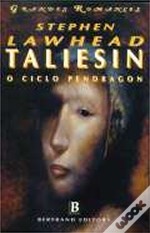
I have had this book series on my shelf for decades, every time I touched them and saw the covers a feeling of pure melancholy and boredom took over and made me put them right back into the shelf. I own fourth edition of the Portuguese translation of the "Pendragon Cycle", published by Bertrand in 1997, and this is it's cover:


Now that I have finally read the book, I can confirm that this cover has nothing to do with the book itself! Who even is this person on the cover? Why is everything so dark? Did they (cover "design" is credited to Fernando Felgueiras - Lets blame him... I guess) just used some random painting for the cover? The original covers look dated, by today's standards, but they represent the book better by having Taliesin's harp featured as the main focus of the cover:


While the Portuguese cover doesn't represent anything about the book, and it still looks dated!
Sigh... anyway, I have made my point. Because of the I kept my distance from this book series up until now, but it actually positively surprised me.


**Warning: The text below might contain spoilers and a fair amount of sarcasm**
**Disclaimer: All of this is purely my personal opinion. That means that it's not worth anything for anyone but me.** 
 
 
Stephen Lawhead's idea of merging the myth of Atlantis with the Arthurian legends is actually somewhat refreshing (at least at first). I feel like this book (not having read the sequels yet) is the foundation for what the author really wanted to write, his own take on the Arthurian legends. Because very little is left from the Atlantis side of the story by the end, since Atlantis is gone.
I very much enjoyed the first 2/3 of the book, we got to explore Atlantis while following Charis our main character, while following the story of Taliesin (starting with his father) in Wales. I liked the dynamic of alternating between the two stories from chapter to chapter. Even when one side started to feel a bit uninteresting, the other side would compensate for it.
The text is very rich, and the author really manages to immerse the reader into the world. However, I don't know if this was a decision by the author, or if it's a mistake of the translator/editor for the Portuguese version, but sometimes the dialogue is a bit of a mess. It's still understandable, but it takes some re-reads to fully comprehend when the dialog ends and the narrator starts. And even this is inconsistent, sometimes it's done in a regular way (paragraph break or divided by a - text - ), other times there's no break at all. I'll make up a small example (too lazy to go dig for an actual example - it would be in Portuguese anyway, so I would have to translate it).

Example:
 
- The wind is getting stronger. - said Maria while looking up at the sky. - It will surely rain. But what Maria didn't know was that a sad spirit was causing the bad weather. Once she realized it, she called for Geralt of Rivia to solve the situation for a few coins.
 
Separating this into dialog and narrator:


- The wind is getting stronger. - said Maria while looking up at the sky. - It will surely rain. But what Maria didn't know was that a sad spirit was causing the bad weather. Once she realized it, she called for Geralt of Rivia to solve the situation for a few coins.


The problem lies between the second bit of dialog and the narration. Now imagine this with more than one character talking and the narrator in the middle. Sometimes it is a real mess. Again, I don't think that this is the work of the author... but I don't know.
But anyway, onward to other complaints (because that's all that enjoy doing).

I loved Charis in the first 2/3 of the book, while she is in Atlantis, after that I feel that she looses all her personality. The same happens to the other main character Taliesin. I don't know the author, so I also don't know if this is due to where he wants the story to go, does he want to prove a point, or if he is just giving the reader a sermon (if so, it really didn't work). Charis was adventurous, curious, brave, self determined, a leader of her people and a role model for others! And then she hears Taliesin sing and done, all her personality is based on her "love" for him, she wants him and... well that's it. Somethings seem to be imposed for the sake of fulfilling a trope, for example, when Charis tells Taliesin that they can not be together because she has "duties" to her people and her father. This makes it look like Charis is still the same as in the first 2/3's of the book, loyal to her people and devoted to help them, as their princess. But all the she does since they left Atlantis is go on horse rides everyday "exploring" the surroundings of her father's palace. She is literally useless, just someone to bow to and praise when she passes.
At the same time, Taliesin was raised to be a druid and a king, as a child he is thought to understand all natural things and respect the gods and traditions, but always with a critical mind. And then he grows up and has an encounter with... GOD. And "GOD" tells him that he can only believe in him, all else is lies and evil, and that he must worship JESUS! And that's it for his character as well... now everything has to do with god's will, everything is due to Jesus, and everyone that still does not believe is described in a condescending way. All was good until everyone started getting happy converted into christianity, the world was mysterious, the plot interesting, people were dense and complex. In the last third of the book, everything is determined by Jesus. At one point, Taliesin is confronted with the fact that Charis is having pregnancy problems, and he states that he could solve the situation by using his powers as a bard... but then decides not too, let Charis and the baby suffer and pray to Jesus instead. 
To have a king and all his vassals, suddenly abandon all their traditions and religion, accept and convert to christianity, just because it is "obviously the true religion", is more "fantasy" than having a bunch of goblin riding dragons suddenly show up...
 And to think that Charis, on the half of the book, started to take a stand against religion itself, opting to trust herself and not prayers and sacrifices... all wastes because of her love at first sight, Taliesin, and immediately had a baptized without her questioning anything.

Anyway, leaving Jesus behind, there is another thing that really bothered me. Though this might be due to my misinterpretation of the text. When we start the story, Charis is described as "young woman" (I don't think we ever get actual ages), I take that as maybe between 12-16 years old. Meanwhile, Taliesin, was just born. Then by the middle of the book, after a series of events, Charis is advised to leave the arena and the dancing with the bulls due to her age, she is not that young anymore, and might get hurt if her body fails to make a jump in time. By this I took that she is past her physical prime, maybe between 25-30 years old. Meanwhile Taliesin is a young man now, maybe around 17? Then Charis leaves the arena and goes home, when she gets there, she finds that she has a new stepsister, Morgana, and she is described as a young child - maybe around 5 years old. 
After this, Atlantis sinks and Charis and Morgana escape to the British Isles. In the last third of the book, Taliesin and Charis fall in love etc etc, and Morgana tries to get in the middle, seducing Taliesin and causing a miscommunication problem between the lovers, almost a love triangle. 

Wait wait wait, so Morgana is now described as a beautiful young woman! WHAT? So, considering that Morgana is between 17-20... Taliesin maybe around 25-30... Charis is... errr in her 40's? Then why is she still described as being young as her sister Morgana!? Why did Morgana age, and Charis remained young? Am I missing something? Maybe I am... but it confused the hell out of me.

Finishing this, with the end of the book, I can see the set up for the continuation, Morgana is evil and behind the death of Taliesin (as expected), along with Annubi. But honestly, I think that the book would be much more interesting following Morgana rather than this "new" Charis. Morgana still wants to discover the mysteries of the world, with Charis now everything is Jesus's will.
The next book is "Merlin", so we must follow Charis's and Taliesin's son... I hope that he becomes a bit more interesting... I mean, it's MERLIN, can you screw up MERLIN? Well... if you strip all the mysticism and magic from him, and make it all about Jesus... yeah maybe you can. I really hope it follows a different direction though.

I was going to give this book a solid 4. At times I even considered a 5. But then with the last third of the book everything came tumbling down to a 3, a shame. The book is not bad! Don't get me wrong, I'm just not very found of when christianity is imposed in such a forceful way upon the reader, and everything that was built before gets discarded without a plausible explanation. But I still liked it more that I thought I would by looking at the cover... I'll get to reading the next one... in a few months.

sexta-feira, 24 de abril de 2020

"The Poppy War", by R. F. Kuang | "Los! Los! Los!"

Welp... it's been a while since I devoured a book in about five days. I had this one on the shelf for a few months, bought it on a whim after seeing a lot of recommendation videos on youtube (while I should be working on the thesis ofc. . . ), "The best fantasy debut of 2018" was the most used sentence. 
To begin, Rebecca F. Kuang did something fantastic, she wrote a book (and an excellent one) at a young age during university! I have all my projects on hold until I finish this cursed thesis! I honestly think that I've mentioned this demon in almost every entry in the blog... I'm going insane... I need to finish this. Oh Rebecca... I envy her determination so much. And this gives me an even bigger appreciation of the book.
One thing is certain, once I started reading, I only stopped once my eyes were hurting. But anyway... let us begin. I think this one is going to be shorter than most of the other entries here. That tends to happen when things are actually good, depriving me of the ability to rant about everything.


**Warning: The text below might contain spoilers and a fair amount of sarcasm**
**Disclaimer: All of this is purely my personal opinion. That means that it's not worth anything for anyone but me.**

I'll begin the rant (I've given up on actually calling these things "reviews") by... actually not beginning. This will make sense in a few moments.
A few weeks ago I watched "The Letter for the King" on Netflix, and I actually started writing an entry here about it (because oh boy it has some issues), but then the good old "thesis depression" hit me and I never finished it.
When I started reading "The Poppy War", my dumb brain kept imagining Rin (the main character) as Iona (portrayed by Thaddea Graham). So now I can't picture Rin without Thaddea's face... why is this relevant? No idea. 

I don't even know where to begin! This book was really good! I'm amazed at the entire journey that the reader can share with Rin in only one book! When Rin entered the Sinegardian Academy I thought: "Ok, this is the core of the book. We will follow Rin until she graduates and then the real shit happens in the next book." But then... woah, woah, woah. Nothing of the shorts! It's remarkable how the author manages to spend just the perfect amount of chapters in each setting. It never gets boring, everything is constantly moving the plot forward at considerable speed! The pacing of the story is great! 
Now, one important detail, the fight scenes (relevant because I'm mentally sacred from the ten-page fight scenes in Filipe's Faria's Books). This is how fight-scenes should be paced, (in my opinion that is), it's not minimalistic, the author gives us plenty of details (that will be the subject of this rant later), enough for the reader to imagine the scene without having to use "slow-motion". The text is fluid, it keeps the reader interested in the flow of the fight/battle (though we see more fight than battle... later).
Actually, not later, let's do it now. I understand that we are experiencing the story from the perspective of Rin, so it is natural that we follow her fights, and not the general battle around her. But, from what I remember, the siege of Sinegard is more or less the only "battle" where Rin is directly involved, when she is defending against Mugen's assault on the city. The rest are basically "fights", the Academy "pit-fights", the ambush on the (crap... was it the Murui?) river, during the siege of Khurdalain the fight with that monster (whose designation I don't remember), then the fight on the Chuluu Korikh, and then the escape from the research facility... and I think that's it (I probably missed some). My point about the battle rest upon what Rin says about the Mugen (also known as "Notjapan" º.º) troops, the character says that Nikara's (also known as "Notchina" ^.^) soldiers were better martial artists, but Mugen's soldiers were better trained at fighting in formations... but then, we don't really feel the weight of this when the protagonist is fighting Mugen's troops, it seems like they come at her one or two at the time, sometimes a bit more when she is fighting along with someone else. If they fight in formation, I would imagine something like a shield-wall, or at least some kind of unit cohesion, and it seems that they do this against the "background Nikara's soldiers", but when it comes to fighting the "relevant characters" Mugen's soldiers lose a bit of their brains. I see why this "must" happen, if it didn't happen the plot would have to change a bit at certain points. If you have two great warriors/martial artists against a formation of (let's say) forty soldiers with basic training, those two great warriors have two options: flee or make a stand and die. As long as the formation keeps its cohesion, the two great warriors would have trouble even killing one opponent. If they invested against one, they would be stabbed by the one on his right, by the one on his left, by the one behind him, if not more. But anyway, I'll move on, because this is just me nitpicking at details and dreaming of absolute realism in a fantasy setting. ¯\_(ツ)_/¯

Back to the main story, (and to wrap this up because it's already past 2 in the morning). The world-building is great, I especially like the way that "classes" and having the protagonist study, allows the reader to enter into the lore of the world (wouldn't say "history", because many things are myth or mutations of what really happened - and that's a positive point - nothing can be taken without thought). I particularly loved Chuluu Korikh, the idea that the shamans lose control or their actions to the gods that possess them and have then to be locked down, not to on a rampage is brilliant! Although I think that most of them are just waiting for the Winds of Winter (GEORGE!!! 😭 ).
The supporting characters are great, of course, some more than others, but I guess that more of their stories will be explored in the next two books.
The main character, Rin, is spectacular! She is not the typical character that only wants good, or that has to save the "world". She has her own plans and ideas, she is not bound by the typical "chosen one" trope. She makes decisions and it's up to the reader to "judge" her choices. And she makes some heavy-hitting choices... some I can't forgive... she basically deprived this fantasy world of having anime in the future... shame on you Rim! I hope that there's "Notkorea" somewhere outside the map (really nice map btw), maybe they are the only hope to invent anime in that world, may the gods help them.
The way that Rin deals with the ever-changing situations around her was what drove me to keep reading at this pace. Her slow descent (or ascent - depends on the reader's views), into what she becomes at the end keeps reminding me on Tanya... and with that, I'll try to make my predictions for the next two books (one is already out, the other is coming out in a few months - but I don't know when I'll have the funds to acquire them). I think that Rin will have her war against the Empress, but at the same time, she will have an internal war against the Phoenix. Again somewhat become like Tanya, fights with the power of a god in physical war, but then fights with that same god inside herself. My question is... can she win both wars?

If she becomes completely "mad" like Tanya (Tanya Degurechaff is not really "mad"... but ye... she's a bit genocidal) it would be cool... basically, the story would be from the PoV of a villain wreaking havoc across the country, more worried with her internal war than with the damage that she is creating around her.

I'll end this here, it's almost 3am so the text must be full of mistakes already.  And I didn't even got to talk about the dichotomy of the idea of "usVSthem" that is very well explored in this book.
Anyway, I'm giving this one a 4/5, with the indication that it is a "upper 4" (whatever that means... I just made it up).

Rin's story reminded me of this music (hence why I relate her so much with Tanya).


Lyrics translated to English (just in case the subtitles become unavailable in the video):

Fire! Take Aim! Fire! Los!
Attention! Take Cover! Get down! Halt!

To the battlefield! The front lines! Then the edge of death!
Show your commitment born from casting your life away!

Fire! Take Aim! Fire! Los!
Attention! Take Cover! Get down! Halt!

I'm sure you can hear the sounds of their guns
The voices of maggots trying to resist.
Stomp them out! Stomp them out!

Men, what is our mission?
Extermination!
Not a single enemy is spared!
There is only one thing to do:
Create a living hell!

Why do we advance deeper into the flames?
Charge head on into a rain of bullets?
What a ridiculous question! It's for the sake of the empire!

To the battlefield! The front lines! Then the edge of death!
Show your commitment born from casting your life away!
Offer your loyalty! Your obedience! Then your very soul!
Offer every fiber of your being, rising a triumphant shout!

Go forth! Prove that we can build
A pile of bodies that can reach the heavens!

Fire! Take Aim! Fire! Los!
Attention! Take Cover! Get down! Halt!

Where's your fear now?
Look at all the blood and flesh: It's like fireworks!
It splatters and splatters!

I haven't forgotten my thousands of scars.
The flame's heat... spilling organs...
Final cries... clouded eyes...
Ahh, those are the things I truly seek!

Peace and tranquility, let alone reconciliation,
Are the acts of domestic dogs who've forsaken their fangs!
Sheer madness, brought on by despair and disturbance,
Sounds more like Paradise than it does Hell!

Those four limbs are made for dancing.
They're made for dancing madly!

Humans are worthless!
Everyone fighting here is worthless,
So show them that your fruitless lives can still bloom!

Law and order... are constructed by madmen.
Nothing but a farce. Utterly absurd from the beginning to the end!

To the battlefield! The front lines! Then the edge of death!
Show this commitment born from casting your life away!
Offer your loyalty! Your obedience! Then your very soul!
Offer every fiber of your being, raising a triumphant shout!

Go forth! Prove that we can build
A pile of bodies that can reach the heavens,
And an explosive sound,
That can even drown out their lingering hatred!

Fire! Rain Hell! Fire! Los!
Attention! Take cover! Get down! Halt!


Btw, I think there's a pandemic going on outside. . .

terça-feira, 25 de fevereiro de 2020

"The Time Machine", by H.G. Wells | And a rant about the "americanization" of stories.

I've been reading a lot of fantasy books, from various sub-genres, and I've read a lot of history books during my studies (still do... getting a bit tired of it actually... not tired of reading and learning, but tired of studying), but finally I've branched out a little into Science-Fiction (I like to call it "Futuristic Fantasy"... but that's just me being evil).

About a month ago, I was searching on the usual online store where I buy my books (yes, I'm contributing to the gradual demise of traditional bookstores, and I should be ashamed... but not having to leave home is too convenient for me to resist), aiming to purchase some fantasy book from my wishlist, when I saw a book: "The War of the Worlds" by H.G. Wells", at a very attractive price (or so I thought) of about 10 euros. The first thing that came to my mind was something like: "oh, I saw that movie, years ago, the one with Tom Cruise". So, in an impulse, I added it to my basket and made preparations to buy it. And then my grandmother called (granny to the rescue) and, after a short talk, I decided to research a bit more about the author and the prices of the books.

I knew that it was a "classic", but I was surprised to learn that the author wrote the book in the late XIX century, which made me even more interested in reading it! What better way to jump from Fantasy and History to Science-Fiction than to start reading some Science-Fiction that is part of History?
And then, I searched for alternatives to the copy that I choose and found an edition by Everyman's Library that contained "The Time Machine", "The Invisible Man" and "The War of the Worlds", in hardcover and priced at around 16 euros (not counting the discount that the store had put on it), simply too good to resist. And so my journey began.
The first "book within the book" was "The Time Machine", so that's where I started. I must say that, at first, it was not easy to get into. The style of writing was very different from what I'm used to and the story didn't seem interesting to me. The "ambiance" of a XIX century "gentleman's club" did not seem to be an environment from where a good story could follow, but I was so wrong. When the "Time Traveler" starts describing his adventures in chapter 3 (most chapters are actually very short - the book is short), then I became instantly hooked. I wanted to know more and more, and I devoured the entire book in one sitting! The writing also became more accessible, literally as if I was one of the men in the room, listening the Time Traveler tell his adventure.

Wells, managed to create a story that can mirror the problems of his time (and ours too, many things have changed, but the problems are similar), and give the reader an interesting narrative. I'm not going to spoil this one, just read it!

Now, it's time for my rant! (I think that I can't bring myself to write here unless it's to rant about something...)
About two days after I finished "The Time Machine", I had an idea for a book that I'm working, I wanted to make a subtle reference to the Eloi and the Morlocks, but I had left the book upstairs... So, lazy as I am, I went to google to get both terms written without typos. There I found that there were various movie adaptations of the book, so I decided that I would watch one at night before sleep (that would be "today", or "yesterday", since it's past 3 in the morning - and the "sleep" turned into writing this). I choose to watch the most recent one, with the same title has the book, made in 2002 and being a remake of the 1960's film.

**SPOILERS** for both the book and the movie below. Again I warn that the following text contains a fair amount of sarcasm.

It's a decent movie... but it completely destroys everything that the book transmits. To begin (this doesn't really ruin anything, but I want to make a point...) the "time traveler" is from New York, and not from London. (but of course... if it was not in the USA, how would the american viewers understand the geography of it? Who on earth would know where London is?). The group of men that gather around the "time traveler" (that in the movie is called Alexander - but that is justified, it would be hard to make the movie from the same perspective as the book), was mostly merged into one character, which is also understandable, what matters the most is the journey of the "time traveler"... but then we spend half the movie without much time traveling. And this is where the movie (in my opinion) committed its first sin. In the book, the "time traveler" desires knowledge, and that is what drives him into the adventure,  while in the movie it's all because of love, the entire first half of the movie is basically dedicated to this. Basically "Alexander" proposes to a woman, and then she gets killed and his motivation for the creation of the time machine is his desire to save her by traveling to the past. And then, being unable to save her, he travels to the future to seek for answers. I can just imagine the writer(s) that made the guide for the movie: "What? The protagonist built a time machine all for the purpose of knowledge? What does that even mean? No one will understand what that is! No no, we need something more primal, that will make the public relate to it... they won't relate to this «pursue of knowledge», let's make this a love story." So, the first americanization was this "dumbing down" of the "time traveler".

When the protagonist arrives at the "future" portrayed in the book, he does it by mistake (again, same problem as before), and then he gets into contact with the Eloi. The Eloi are very different from the Eloi of the books, but I guess some of that is the price of moving the plot to New York... the Eloi from the books lived in stone, somewhat modern buildings above ground. The ones from the movie live on some cloth and bamboo tents, on the side of a cliff... ok, why? The Eloi in the books are very simple people (or so it appears at first), they live and rejoice during the day, and sleep in their buildings at night. The Eloi from the movie appear to be a completely normal people, apart from the fact that they do not fight.
In the book, the "time traveler" befriends a Eloi woman named Weena, and shares part of his adventure with her. In the movie, Alexander "befriends" (obvious love interest) a woman named Mara (no harm done... but why? Did they think that people would not see the movie because someone was called "Weena"?). And here again, another sin, another americanization... the protagonist needs his "love interest", he needs to save her and "get the girl" in the end! He needs to be a hero! And so... we need the villains.  
The Morlocks in the movie are portrait as typical villains, they hunt and eat the Eloi (just like they do in the book), they take Mara and a lot of other Eloi, eat everyone but Mara, and lock her in a cage so that our protagonist can have his "save the girl" moment. But wait! There's more! Her cage is in a room with the "chief" of the Morlocks! He is super intelligent, he even has psychic powers! And so, we have our main villain... our "dark lord", the one that commands all the "Morlocks", etc etc... Typical American stereotype. 

Almost 4 am... gotta hurry and make my point. In the book, there is no hero, there is no love interest, there is no villains! The "time traveler", has problems with the Morlocks, but they are never treated has villains, as they are in the movie. Both Morlocks and Eloi are what they are, the presence of the "time traveler" is a minor happening in both societies. He sees, he learns what he can, and he returns to his Time Machine as soon as he can. There's is no good nor evil, the future that Wells wanted to transmit was inevitable, one man could not change it, less of all in little more than a week. In the movie, Alexander tries to entice the Eloi to fight the Morlocks, when they refuse, he fights them ending up killing all of them by destroying his time machine and settling with his "new girl"... the complete opposite of the message of the original... actually, the same message that we get from most american movies. "Be the hero, fight and kill all that oppose you, get the girl and save the world." 

The book is a masterpiece! The movie adaptation is a wasted opportunity, it considers that it's viewers would not be able to deal with intricate thoughts such as "the protagonist is not a hero, and he doesn't kill the baddies".

Anyway... it's late. Rant over.

5/5 for the book.
2/5 for the movie.

sexta-feira, 7 de fevereiro de 2020

"Crónicas de Allaryia: Marés Negras", by Filipe Faria. | And yet another "little" rant about life and stuff...

Vou fazer este no meu atarracado português, não me está a apetecer escrever em inglês hoje. 

Bem, acho que devo começar com um disclaimer (pronto, lá se foi o português). Comecei a ler este livro em Maio de 2019, e terminei agora, em Fevereiro de 2020... quase um ano depois. Pelo meio li a Lua de Joana e todos os livros da Song of Ice and Fire. Tal evidência três coisas, primeiramente algo se passou na primeira metade do livro para eu o pôr de lado e iniciar outros (nunca leio dois livros, para prazer pessoal, em simultâneo); segundo, a minha memória da primeira metade do livro não é grande coisa, portanto vou incidir este texto e os respectivos exemplos necessários sobre a segunda parte do mesmo; por último, não foi uma experiência muito agradável saltar do George R. R. Martin de volta para o nosso Filipe Faria, portanto muitas das minhas críticas vão ter por base a minha familiaridade com o estilo de escrita do Martin (algo que é bastante injusto para com o Filipe Faria, mas que não consigo evitar).


**AVISO, este texto é a minha opinião pessoal, representando os pontos que mais me afectam na obra em questão. O texto contêm SPOILERS e uma boa dose de ironia e sarcasmo.**

Tal como acima referi, algo de errado se passou com a primeira parte do livro, não vou entrar em pormenores (pois não me lembro dos mesmos e na altura não tinha o hábito de fazer apontamentos enquanto lia), mas para eu pôr o livro de lado e começar a ler outros é porque o enredo não estava a ser "cativante". Tenho a sensação que esta primeira parte podia ser reduzida a pelo menos metade do seu volume, convergindo alguns pontos do enredo e eliminando outros. Porque há capítulos em que não há progresso algum para o objectivo das personagens e não há nenhum desenvolvimento relevante das próprias (personagens). Ou pelo menos foi isto o que senti, e que me fez pôr o livro de parte.

Passando então à segunda parte (se bem que muitos dos pontos que vou tocar aplicam-se também à primeira), começando pelo estilo de escrita.
Eu compreendo o que o autor tentou fazer, mas para mim não funcionou. Acabado de sair de Westeros, estou habituado a que cada capítulo seja da perspectiva de apenas uma personagem, onde o narrador descreve a cena da perspectiva da personagem, e com acesso aos pensamentos da dita personagem. Também já li o The Hobbit  e a trilogia The Lord of the Rings, onde o narrador conta a história numa perspectiva geral, tendo conhecimento suficiente para descrever as personagens, bem como o que as rodeia, mas não para relevar ao leitor os pensamentos de todas. O narrador de Filipe Faria é nos apresentado como "Pearnon, o Escriba", alguém que nos está a narrar a história e que têm acesso a tudo, aparentemente. Neste caso o narrador é como uma personagem que não participa na história e que apenas observa e relata... contudo a forma como o texto é construído é algo confusa. O narrador salta de uma narração geral para uma narração da perspectiva da personagem X, depois para a da Y, e por ai, por vezes mostrando ao leitor os pensamentos de uma personagem, outras vezes os pensamentos de várias personagens, por vezes de nenhumas, outras vezes da perspectiva de personagens figurantes, tudo ao mesmo tempo dentro de um mesmo capítulo! É um narrador muito inconsistente em termos de sistema de narração... e ainda por cima, por vezes, o narrador engana o leitor (o que faria sentido, se este não fosse omnisciente). A forma como Filipe Faria escreveu certas partes da narrativa fazem com que o narrador perca credibilidade, dando mais importância à tentativa de surpreender o leitor. Vamos a um exemplo:
A certo ponto Worick está a lutar com um drahreg e o narrador diz: «O drahreg debateu-se e procurou algo na cintura com a mão, crispando os dedos no cabo de um farpão e cravando-o na garganta de Worick antes que este sequer se apercebesse do que acontecera.»
Ora bem, como narrador é Omnisciente, o leitor toma esta afirmação como verdadeira. Contudo, mais à frente no capítulo (quando o autor decide mudar novamente para a perspectiva de Worick), temos o seguinte: «Worick grunhiu, levando a mão à ponta do farpão, que não o golpeara com força suficiente para quebrar os elos da cota de malha sobre o gorjal de couro que lhe protegiam o pescoço.»
Cá está o problema da perspectiva. Em ambos os casos o narrador parece estar a descrever os acontecimentos seguindo Worick... mas, aparentemente, no primeiro exemplo, a narrativa passa (durante uma curta parte) para a perspectiva de um dos milhares de drahregs que estão na batalha, o que faz com que o narrador deixe de ser omnisciente durante um parágrafo.
Ou seja, esta incoerência confunde-me a leitura, e (na minha opinião), estraga o desenrolar da acção. Acho muito mais interessante quando uma história é narrada de uma forma coerente, sem estar sempre a saltar de perspectivas. Enfim.. passando para às próximas questões, ainda relativamente à escrita.

Não há dúvida que o autor têm um vasto vocabulário, têm uma grande habilidade com a língua portuguesa, tão grande que eu tenho de ir consultar dicionários online quase uma vez por página. Acho que o texto poderia ser mais acessível ao leitor comum, mas isso pode ser apenas indício do meu pouco à vontade com a nossa língua.
Para mim, o grande problema do estilo de escrita de Filipe Faria são as descrições. Os detalhes sobre a paisagem, edifícios, roupas, personagens, entre outros, são extremamente longos, mas eu compreendo... um autor cria algo, e quer partilhar com o leitor a sua criação. Portanto, isso eu até perdoo. Agora, não consigo mais suportar as descrições de lutas... são extremamente detalhadas, com todos os movimentos descritos ao pormenor... simplesmente não é algo para mim. Talvez alguém goste de ler tal coisa. Durante os primeiros dois livros das Crónicas de Allaryia li todas as palavras que o autor escreveu, por uma questão de respeito e admiração (pois mesmo com todas estas criticas admiro bastante o autor, por ter conseguido escrever e publicar os seus livros, algo que tenho esperanças de um dia também conseguir), mas nesta segunda parte do terceiro livro, "Marés Negras", confesso que não consegui. Por fim, dei por mim simplesmente a "dar uma vista de olhos" sob as partes de descrição de luta (que podem ser um parágrafo, mas normalmente ocupam uma ou mais páginas), e sinto que não perdi nada. Toda a descrição das lutas não acrescenta nada à história, não há desenvolvimento nenhum das personagens, o enredo não avança. As descrições de lutas parecem literalmente feitas para um guião de um filme ou peça de teatro, com as indicações necessárias e detalhadas para permitir aos actores representarem uma cena de acção.
Para além disto, as descrições de lutas, fazem (na minha opinião) o contrário do que uma cena de luta num livro devem fazer. Tenham-se por exemplo os últimos capítulos do livro, quando o grupo de personagens principais está dentro de uma fortificação cercada por inimigos (mais pormenores sobre isto adiante...). Achei estes capítulos muito interessantes e o autor conseguiu representar uma situação de cerco relativamente bem, houve momentos onde fiquei envolvido na acção, com flechas a voar, as personagens a gritar ordens, os inimigos a aproximarem-se, com um grande ambiente de tensão, tal como deve ser uma boa batalha! Mas depois, quando o desgraçado de um inimigo se aproxima de uma personagem importante... pronto, acabou tudo e temos duas páginas de descrição detalhada de cada movimento que as personagens fazem... as cenas de luta completamente estragaram a dinâmica da batalha. É como ver um filme qualquer, e quando chega a cena de acção, esta é completamente passada em câmera extremamente lenta, demorando cerca de cinco minutos, quando deveria demorar dez segundos se estivesse a uma velocidade normal. É frustrante, principalmente considerando que quase todos os capítulos têm cenas de luta. Na verdade, acho que os melhores capítulos são aqueles em que não há luta nenhuma. Nesses sente-se o enredo a avançar, os personagens a crescer... enfim, é melhor ficar por aqui e passar à frente.

Deixando o "estilo de escrita" e passando para questões do enredo em si. Em geral gostei mais da direcção que este livro seguiu, em comparação aos dois anteriores. Contudo, não lhe faltam problemas, alguns dos quais já se arrastam desde o primeiro livro.
Começando pelo fim, já que falei no cerco, e estando ligado ao problema das lutas... o típico e (perdoem-me) estúpido cliché de, quando duas personagens estão em lados opostos, no meio de uma batalha, ambos armados e com o intuito de se matarem um ao outro, parecer que na verdade não se querem matar. Isto é piorado pelo facto de a luta ser descrita até à exaustão. Exemplo, temos Quenestil numa muralha a lutar (de momento a disparar flechas) contra os drahregs (imagine-se tipo orcs, para quem não leu o livro - não é bem, mas é suficiente para perceber a situação), juntamente com uns conscritos (mais sobre estes coitados mais adiante). De repente aparece na muralha Tannath (diga-mos, um inimigo de Quenestil), que está armado com um estilete e um quebra-espadas. Tannath, ao ver Quenestil com o seu arco, desafia-o a largar o arco e a lutar com ele corpo a corpo, dizendo que o vai matar e depois matar a Slayra (mulher grávida de Quenestil), etc etc... Felizmente, Quenestil não é burro, e larga imediatamente uma flecha contra o seu inimigo, fazendo-o cair e largar as suas armas. Fantástico, até aqui mais ou menos tudo bem, agora com o seu inimigo caído e desarmado, Quenestil apenas precisa mata-lo de vez! Veja-mos algumas das opções ao seu dispor:
1- Largar mais uma flecha contra o Tannath;
2- Abaixar-se e apanhar alguma arma do chão (deviam haver muitas devido aos inimigos caídos), e proceder para matar Tannath;
3- Pegar em uma das suas flechas e usa-la como arma directa para matar Tannath;
4- Avançar rapidamente para tentar apanhar uma (ou as duas) armas que Tannath deixou cair quando foi atingido pela sua flecha;
5- Avisar algum dos seus conscritos para simplemente matar aquele inimigo desarmado e caído.
6- Arriscar e avançar contra Tannath com o seu arco, usuando-o como arma directa (não muito eficiente, mas uma ponta de um arco no olho faz milagres);
7- Entre outras opções com váriadas possibilidades de sucesso. 
Pois bem... o que o autor decidiu que Quenestil devia fazer?  Quenestil, larga o seu arco, corre na direcção de Tannath e começa a esmurra-lo! E lá vamos nós para mais uma cena de luta... os dois personagens ficam ali, no meio do caos de batalha, aos murros um ao outro! O autor também não faz com que Tannath tenha a inteligência de tentar imediatamente apanhar alguma arma, limitando-se a pôr a personagem também aos murros e pontapés, enquanto vomita um típico discurso de vilão. Entretanto o Tannath lá pega no seu estilite, que estava ali no chão o tempo todo e tenta matar Quenestil com ele... o engraçado é que durante isto tudo, Tannath diz que vai matar Quenestil rapidamente, mas ameaça que a morte de Slayra iria ser extremamente lenta (para além de a violar e assim)! Graças aos deuses, Quennestil consegue matar Tannath espetando o estilete deste no coração, caso contrário (e como a morte "rápida" de Quenestil, já ia em algumas páginas de descrição) Tannath iria matar e violar Slaya "lentamente"... o que com certeza significaria um livro inteiro para descrever estes acontecimentos de forma "lenta"...
Enfim, Quenestil lá vence o confronto, depois de ter dado e levado bastante pancada e procede a se abaixar e pegar num machado (de algum drahreg derrotado) para ir ajudar os seus a continuar a luta...

. . .

. . . . . . . . . .

AI MINHA NOSSA SENHORA!!! Então primeiro vai ao murro, e agora que o seu inimigo está derrotado é que apanha uma arma? Eu admito que quando li isto dei um valente facepalm...
As personagens não têm culpa... a culpa é do autor. E já agora do revisor... estes livros têm revisor imagino... penso eu... digo eu... sei lá. Caramba, é que coisas como estas são apenas detalhes, mas são ridículos, parecendo que não, para um leitor atento, estragam todo o processo de imersão na história.
Enfim... mais uma vez, é melhor passar á frente.

Vamos fazer uma pausa na batalha e falar de Lhiannah... mais uma vez, eu percebo o que o autor pretende com a personagem. Mas a execução, na minha opinião, deixa muito a desejar. Nada melhor que um exemplo.
Lhiannah viaja com o grupo desde o primeiro livro, ela têm a sua própria espada e armadura. Na primeira parte do livro ela foi atacada, e já não me recordo se a sua armadura ficou completamente inutilizável ou não. Mas é irrelevante. Na segunda parte do livro, Lhiannah encontra-se primeiramente ainda em recuperação, aquando do grupo fazer a viagem de barco... pelo que me lembro, ela não vai nua, portanto está vestida e até têm uma capa com capuz para lhe tapar as cicatrizes. Quando chegam à fortaleza dos sirulianos, Aemer-Anoth, ela também não está nua. Aquando do momento de distribuírem armas e armamento está escrito: «Quando chegou a vez dos companheiros, o seu equipamento foi-lhes restituído: o arco ocarr e o facalhão de Quenestil, o martelo de Worick, a afilada espada e a couraça de Lhiannah, os punhais e adagas de Taislin (...)». Depois, o grupo é convidado para uma festa e arranja-se como pode, com as roupas que têm. Antes da festa é lhes oferecido um banho, após o banho são lhes oferecidas roupas pelos Eahlan (tipo elfos de cabelo branco), estas roupas são típicas da cultura deles (se bem inicialmente o narrador diz que estas roupas eram devidas à temperatura da sala - e depois passam a usar estas roupas durante toda a festa), e as roupas femininas eram «constituídas por uma saia branca e duas faixas de tecido atadas ao pescoço que se cruzavam sobre o peito e que expunham o seu ventre liso.»
Depois da festa o grupo prepara-se para a vindoura batalha e todos estão relativamente presentes menos Lhiannah, quando esta aparece ainda anda com as roupas da festa e sandálias... no meio de uma fortificação prestes a ser assaltada... Depois, ajuda a personagem principal (Aewyre) a por a sua armadura, e este fica a olhar para todo o corpo dela que se encontra exposto. Lhiannah reprende-o e diz que «E tem cuidado para os olhos não te caírem das órbitas. Já me bastou a volta que tive de dar pelas muralhas, rodeada de marmanjos.» . . . e por fim acaba por pedir a Aewyre para lhe emprestar uma camisa dele, para não andar tão exposta...
Não era suposto Lhiannah participar directamente na batalha (porque Aewyre lhe fez olhinhos de ursinho... ohhhh que fofos - grande guerreira que esta saiu tambem... todos eles aliás, deixam muito a desejar, sejam pela sua perícia ou pelas decisões que tomam... mas isso é outro assunto, não vale a pena elaborar). Portanto Lhiannah é suposta ficar a ajudar na enfermaria... ok, mas é uma batalha, se as coisas correrem mal o inimigo pode chegar à enfermaria...
No final Lhiannah acaba por participar um pouco na batalha, sendo ela a liderar um grupo para abrir o portão a reforços silurianos (outro problema para mais adiante)... durante e depois da batalha o leitor vem a perceber, pela constante descrição, que Lhiannah combateu de sandálias e com a roupa que lhe foi dada para a festa, com a tal camisa de Aewyre por cima... Mas afinal o grande mistério da história é o que raio aconteceu a toda a roupa desta mulher! Onde está a roupa dela que os Eahlan levaram? Os elementos masculinos andaram com a sua roupa normal depois da festa! A Slayra também não andou na enfermaria a mostrar as mamas e a barriga de grávida aos feridos... ela voltou à sua roupa! O que aconteceu à roupa de Lhiannah? E pior? Quem foi a criatura maldita que lhe roubou a couraça e a fez combater como se fosse para a praia? Um verdadeiro mistério...
É obvio que o autor mete sempre a Lhiannah nestas situações, sem nexo nenhum (como daquela vez, em que ela decidiu simplesmente não usar calças), como uma forma de sexualizar a personagem excessivamente. É que não há necessidade de ter a personagem nestes contextos e a fazer figuras tristes, e depois a evidenciar ainda mais a situação pondo a personagem a reclamar de que todos olham para ela... ela devia era reclamar de como é que ninguém a matou durante toda esta batatada... é que todos os outros que foram de armaduras estão todos partidos... ela foi de bikini e depois apenas reclama que está suja... Haja paciência.

Mudando de assunto... os desgraçados dos conscritos, mal tratados por tudo e todos, os verdadeiros heróis deste livro, e nenhum deles é uma personagem... são todos figurantes. Em vez de se perder tanto tempo em descrições de lutas, seria mais interessante o leitor ficar a conhecer melhor alguns dos conscritos, condenados a lutar pela sua liberdade. O nome de alguns, de onde vieram, o que fizeram para serem condenados, e as suas ambições caso sobrevivam à batalha. Era muito mais impactante o leitor ser confrontado com a morte de um personagem secundário com o qual é possível ter empatia, do que ter uma cena de luta onde uma personagem principal apenas mata uma série de inimigos figurantes.
Os conscritos morrem às carradas, e nunca me importei com nenhum deles, não são ninguém, não tinham personalidade. Na verdade, também não me preocupei nunca com nenhuma das personagens principais, como esperado não morreu ninguém... quer dizer, morreu, mas já lá vamos.

Isto leva ao típico problema do deus ex machina, que também já se arrasta desde o primeiro livro. Tenho a sensação de que este grupo nunca consegue verdadeiramente derrotar, ou ultrapassar, alguma oposição sem a intervenção de alguma força alheia.
Desde o início de toda a questão do cerco, era óbvio que os silurianos iam acabar por se juntar à batalha no final, até mesmo os Eahlan ajudam no fim, destruindo todo o propósito de ambos não ajudarem desde o começo... mas pronto.
Depois, quando Seltor lá regressa após vinte anos, etc etc, lá vem mais um deus ex machina para resolver a situação. A forma como acontece até é bastante interessante, Seltor (o mau mau da história) esteve todo estes anos preso dentro de Ancalah (a espada que Aewyre trás consigo), e o pai de Aewyre (que foi a razão pela qual esta demanda se iniciou), esteve preso dentro da espada de Seltor durante os mesmos 20 anos. Mas então, com o surgimento de um inimigo poderoso (que o grupo não consegue derrotar), lá se arranja maneira de fazer surgir o seu némesis, igualmente poderoso. Basicamente os dois anulam-se.
Mas a história precisa de continuar, temos mais livros pela frente, precisamos que o vilão continue a ser uma ameaça, mas não podemos ter alguém poderoso o suficiente para o derrotar... assim não há a tensão de "o protagonista ter de derrotar um inimigo muito mais poderoso que ele". Portanto o autor recorre ao mesmo "método" que eu já referi aquando do primeiro livro desta colecção. Resumidamente, protagonista salta para o meio da luta entre Seltor e o seu Pai, a gritar pelo papa.... e Seltor, não querendo dececionar o leitor, obviamente muda a sua trajetória de ataque para o miúdo idiota que saltou ali para o meio e lhe deu a vantagem de bandeja.
No final Seltor acaba por "fugir" ferido (tinha de ser, senão como é que o grupo saia dali?), e o pai de Aewyre morre para salvar o filho. Grande choradeira, e tristeza etc, etc. A personagem apenas foi trazida de volta para salvar a situação e resolver um problema de enredo, tal como a "namorada" do protagonista quando esta salta para o meio de uma luta (literalmente suicidando-se), no primeiro livro, porque com ela viva a história não continua.

Tá quase, só mais um assunto, nesta batalha não morreu ninguém relevante da parte do "bem", só figurantes (pobre coitados dos conscritos) e uma personagem (pai do protagonista) cuja função era ser deus ex machina durante cinco minutos. Mas, do lado do "mal", ai sim houve baixas, para além de milhares de figurantes, morreu a Jessie, o James e o Meowth, pobres coitados andaram três livros atrás do Pikachu, e sempre a falhar, pelo menos agora podem descansar em paz... ESPERO EU... fica aqui prometido, se o autor trouxer de volta à vida alguma destas personagens, eu juro que retiro um ponto à classificação do próximo livro, independentemente da classificação que lhe der... , se der 4/5, fica 3/5, se der um 3/5, fica 2/5 e por ai em diante!
A Hazabel ficou toda espezinhada e queimada. O Baodegoth foi-se com o Seltor. E o Tannath foi espetado com um estilete no coração. Depois da batalha tenho a certeza de que, se algum inimigo caído ainda respira-se os conscritos e silurianos tratavam de lhes por fim à vida... sabemos que o corpo do Tannath foi mandado ao rio... Se algum deles aparece vivo em qualquer que seja dos próximos livros... ai bem me podem "ouvir"...

Ai não! Afinal falta mais um pormenor, tinha este apontado num papel à parte. Mesmo sendo fantasia com magia e assim não posso deixar de referir isto. Dei um ponto positivo quando me apercebi de que ninguém usou "flechas incendiárias" durante os confrontos. Bom trabalho, ao menos um livro de fantasia que não inventa algo que não funciona.
E depois, o narrador diz que os sitiantes cobriram a sua torre de assalto com peles molhadas para evitar que lhe pegassem fogo... procedendo a dizer «(...) e sua fronte estava coberta de peles húmidas; uma precaução desnecessária, pois os defensores não dispunham de flechas incendiárias ou de qualquer outro material inflamável para usar em projécteis.» e assim retirei o tal ponto, e imaginei:

O Allumno para o narrador, depois de ter posto umas escadas a arder com a Palavra apenas um capítulo atrás:


O Worrick para o narrador, depois de ter planeado usar a gordura dos mortos contra os sitiantes apenas um capítulo atrás:


Raio do narrador é inconsistente como tudo... enfim... chegou por hoje. 


Anyway... 3/5, novamente. Não é mau, também não se pode dizer que é excelente, e não é para todos. Mas enfim... ei de passar para o próximo (que já se encontra na estante) dentro de uns meses.
Já que ainda estou a escrever, aproveito para registar que prefiro as capas originais. Percebo que muraram as capas para tentar acompanhar as "tendências" de capas de outros livros de fantasia (*coff coff* A Song of Ice and Fire), mas as capas originais pelo menos eram arte, tinham valor pois alguém desenhou-as. As novas capas são simplesmente imagens editadas e postas ali... mas isto não têm nada haver com o autor, provavelmente é teimosia da editora. 


(Eu quando comecei isto pensei: "epá este vai ser curto, pois basicamente apenas tenho exemplos da segunda parte do livro... mas parece que a minha capacidade de fazer uma "rant" não está nada enferrojada.) xD